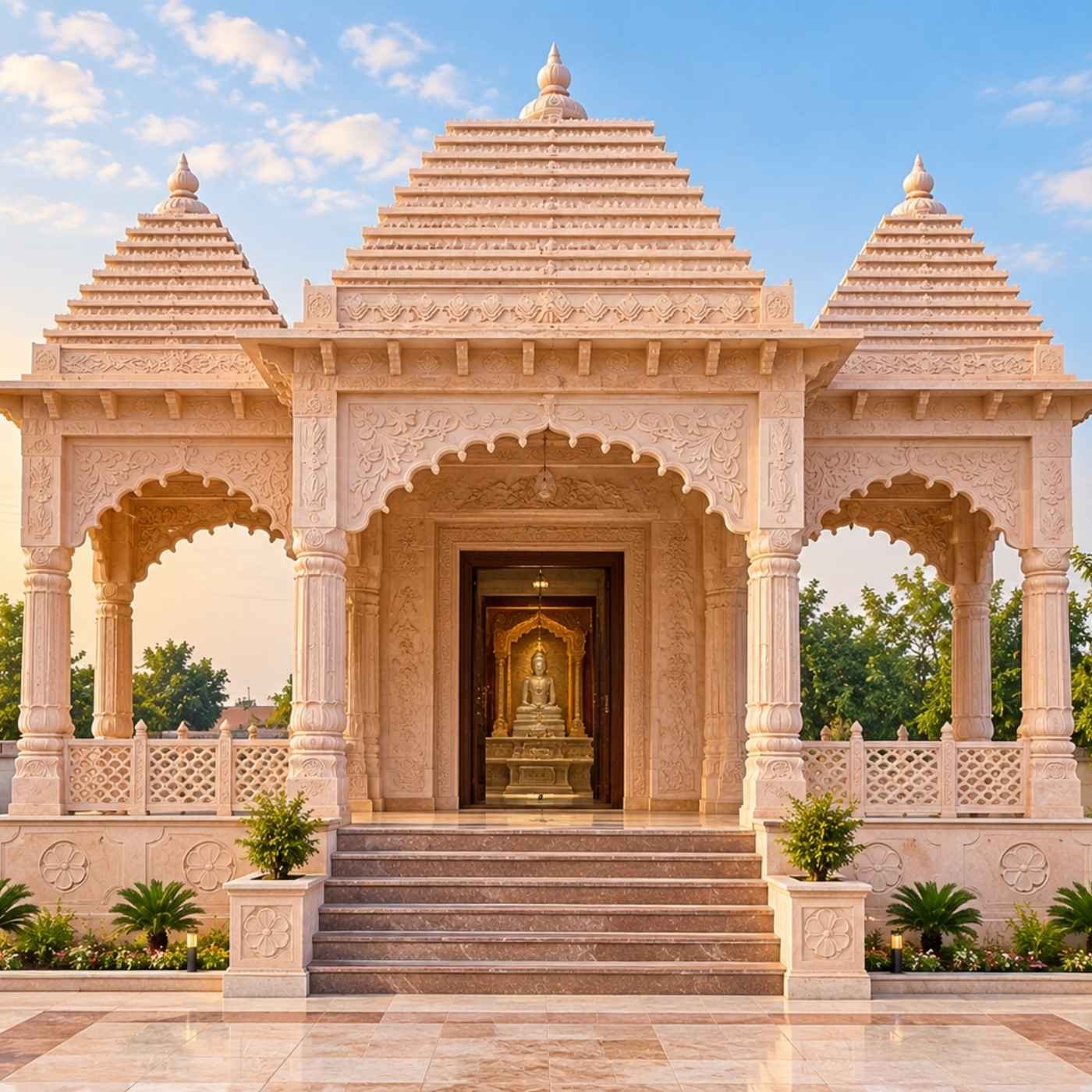
Large Red Sandstone Temple – 30×40 Ft Monumental Mandir
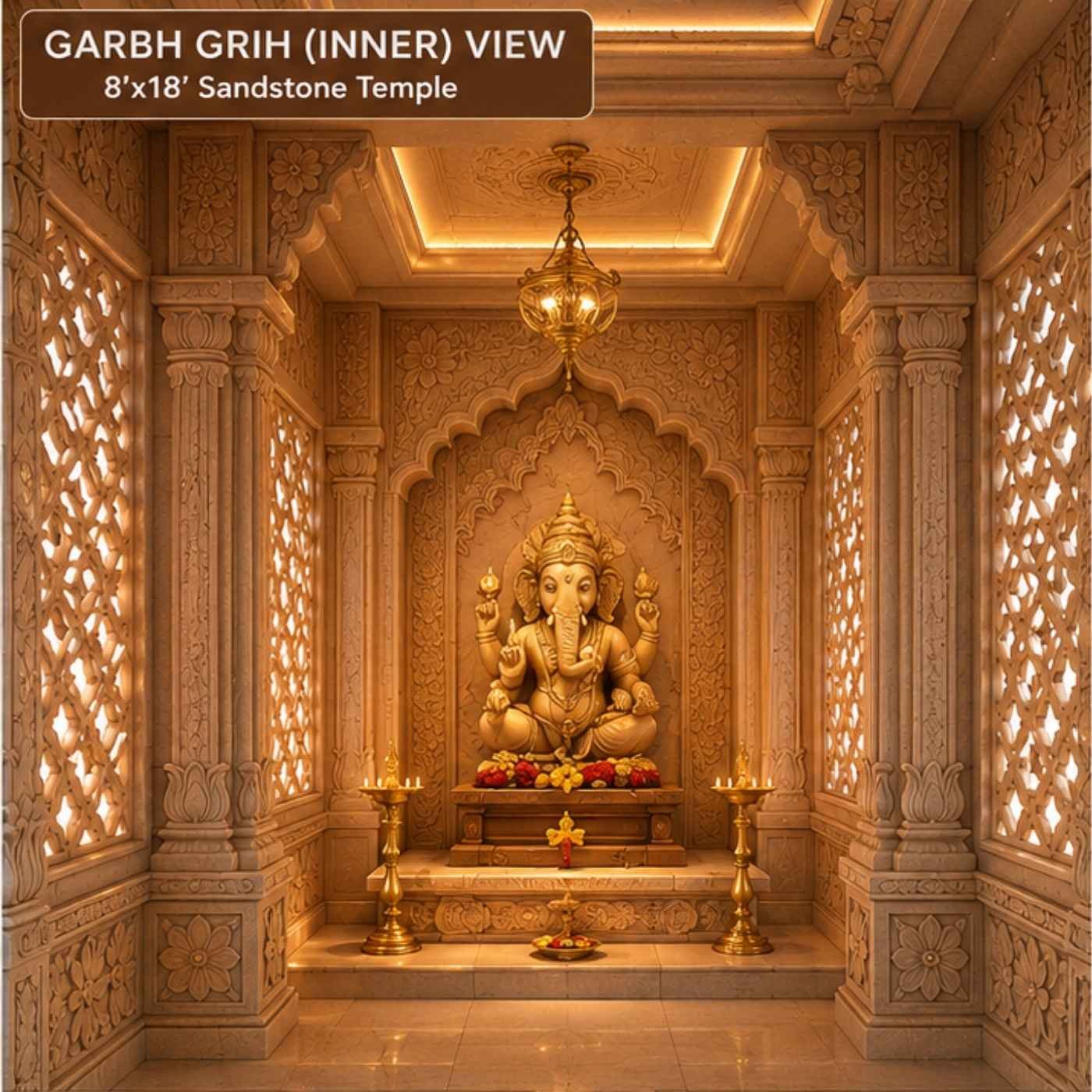
Designed to make a grand architectural statement, this large Sandstone & Stone temple is ideal for sprawling private estates, housing societies, and public spiritual grounds. Masterfully hand-carved from natural Sandstone & Stone material, it showcases a multi-bay open mandap, soaring multi-tiered Shikharas, heavy sculpted columns, and extensive floral bas-relief panels. Built with maximum load-bearing strength and complete outdoor weather resilience, this monumental Sandstone & Stone sanctuary stands as a magnificent, timeless landmark built for generations.


Large Red Sandstone Temple Details
Practical specifications, dimensions, and architectural details of this temple design.
Custom dimensions, architectural drawings, carving details, and site-specific requirements can be discussed before production.
Large Red Sandstone Temple Manufacturer in India – 30 × 40 × 21 Ft Traditional Design
Building a large stone temple is not simply a matter of making a few carved pieces and putting them together at the site. A project of this size involves many individual stone components, and each component needs to work with the overall architectural design.
At Natural Stone Industries, we manufacture sandstone temple components according to the project size, architectural drawings, stone selection, carving requirements, and site conditions shared by the customer.
This particular design measures 30 Ft in width × 40 Ft in length × 21 Ft in overall height. It is planned as a large traditional sandstone temple with a Garbhagriha, Mandap, 18 carved stone pillars, 7 Mehrab panels, and 2 Shikharas.
If you are looking for a complete sandstone and stone temple , the design can be adapted according to the actual site, required dimensions, architectural layout, and carving requirements rather than treating one fixed size as suitable for every project.
Quick Navigation (Table of Contents)
1. About This 30 × 40 × 21 Ft Red Sandstone Temple
2. Natural Red Sandstone – Colour, Grain and Character
3. Main Architectural Components of the Temple
4. How We Manufacture a Large Sandstone Temple
5. Hand Carving and Machine Cutting – How Both Work Together
6. Customization for Different Temple Projects
7. Where Can a Large Sandstone Temple Be Used?
1. About This 30 × 40 × 21 Ft Red Sandstone Temple
This temple design has an overall size of 30 Ft × 40 Ft with an approximate overall height of 21 Ft. The layout includes a central Garbhagriha, a Mandap area, carved pillars, Mehrab work, and Shikhara elements. The number and size of these components can change when the design is adapted for a different site.
The 18 carved stone pillars form an important part of the architectural appearance of this design. Pillar profiles, base details, shaft carving, capital design, and decorative patterns can be selected according to the overall temple style.
For customers looking specifically at pillar designs, you can also explore our carved sandstone pillars
The temple can also include decorative stone elements such as Jali panels, Mehrabs, Torans, brackets, and other carved architectural pieces. Our sandstone Jali panels can be considered when similar carved Jali work is required for the temple or surrounding architectural areas.
2. Natural Red Sandstone – Colour, Grain and Character
For this design, the specified material is natural red sandstone. One of the reasons customers choose natural sandstone is that the stone itself becomes part of the architectural character of the temple. The colour is not a painted surface, and individual blocks can show small differences in shade, grain, and natural texture.
These variations are normal in natural stone. Two blocks taken from different parts of the same stone source may not look completely identical, particularly after cutting and finishing. For a large temple project, stone selection therefore becomes an important part of the manufacturing process.
We work with different types of sandstone architectural components, so customers planning a complete project can also see our
architectural stonework and related sandstone art and craftwork for additional design references.
3. Main Architectural Components of the Temple
A large sandstone temple is made from many individual stone pieces that work together as one architectural structure. Some of the main elements in this design include:
- Garbhagriha:
The main sanctum area of the temple, planned according to the architectural requirements of the project. - Mandap:
The covered or open architectural space around the sanctum, with the size and arrangement planned according to the overall temple layout. - 18 Carved Stone Pillars:
Decorative and structural architectural elements with scope for different shaft, base, and capital designs. - 7 Mehrabs:
Carved arched elements that add depth and detail to the temple architecture. - 2 Shikharas:
Traditional upper architectural elements that give the temple its distinctive vertical profile. - Jali and Decorative Stonework:
Depending on the project, carved Jali, Toran, brackets, and other decorative components can be incorporated into the design.
4. How We Manufacture a Large Sandstone Temple
For us, temple manufacturing starts well before the actual carving begins. A large temple contains many stone pieces of different sizes and shapes, so the work is normally divided into stages. The exact method can vary according to the drawing, stone size, and type of component being produced.
- Design, Drawing and Requirement Discussion:
We first understand the proposed temple size, available site area, architectural drawing, number of pillars, Shikhara arrangement, Jali work, and other required details. - Stone Selection:
Suitable sandstone blocks are selected according to the size and type of component required. - Block Cutting:
Selected blocks are first cut into workable sizes using heavy-duty stone cutting equipment. - Measurement and Marking:
After initial cutting, measurements and carving layouts are marked on the stone. - Rough Shaping:
Extra stone is removed to create the basic shape of the required component. - Detailed Stone Carving:
Once the basic form is ready, decorative floral patterns, geometric designs, traditional motifs, and architectural details are developed. - Finishing and Edge Work:
After carving, edges, surfaces, joints, and visible areas are checked and finished according to the component. - Component Checking:
Individual pieces are checked against the required dimensions and design before dispatch. - Numbering and Dry-Fit Planning:
Stone components are organized and numbered according to their intended location in the temple layout. - Packing and Transportation:
Finished stone pieces are prepared for secure transportation to the project location.
Customers interested in other architectural stone components can also explore ourarchitectural stoneworkcollection.
5. Hand Carving and Machine Cutting – How Both Work Together
A large sandstone temple usually involves both accurate machine cutting and skilled hand finishing. These two methods are not necessarily alternatives; they can be used at different stages depending on the type of stone component and the level of detail required.
Heavy-duty cutting equipment helps us prepare large sandstone blocks and bring them closer to the required dimensions. This is particularly useful for large pillars, structural stone pieces, wall components, and other heavy sections where accurate initial sizing is important.
Detailed carving and finishing require a different approach. Floral patterns, traditional motifs, edges, profiles, relief work, and small decorative details may require skilled artisan work and careful finishing after the basic stone form has been prepared.
The combination of machine-assisted cutting and hand craftsmanship allows the manufacturing process to remain practical for large projects while retaining the carved character expected from a traditional sandstone temple. For related carved products, you can also explore our sandstone art and craft collection.
6. Customization for Different Temple Projects
The 30 × 40 × 21 Ft dimensions shown on this page describe this particular temple design. A customer does not necessarily need to build the temple in the same size. Large sandstone temples are normally planned around the available site and the required architectural layout.
Depending on the project, customization can include:
- Temple width, length, and overall height
- Garbhagriha and Mandap layout
- Number, size and design of carved pillars
- Jali pattern and panel dimensions
- Mehrab and Toran design
- Shikhara size and architectural profile
- Floral, geometric, and traditional carving details
- Component dimensions according to the architectural drawing
For a customized project, it is useful to share the available site dimensions, drawings if available, preferred stone, approximate temple size, and the type of architectural details required before manufacturing begins.
7. Where Can a Large Sandstone Temple Be Used?
A large carved sandstone temple can be planned for different types of private, religious, community, and architectural projects. The final design depends on the available land, intended use, local requirements, and architectural concept.
- Private Estates and Farmhouses:
Large temple structures can be incorporated into spacious private properties and farmhouse developments. - Temple Trusts and Religious Sites:
Custom temple structures can be planned according to the requirements of trusts, religious institutions, and worship spaces. - Gardens and Open Landscapes:
Larger properties may include a dedicated stone temple within a landscaped outdoor area. - Community Spaces:
Temple structures can be designed for community and cultural spaces where a larger architectural presence is required. - Heritage and Resort Projects:
Traditional sandstone architecture can also be incorporated into heritage-inspired hospitality and resort environments.
You can explore our complete sandstone and stone temple collection for other temple sizes and architectural designs.
8. What We Need to Prepare a Temple Quotation
The cost of a large sandstone temple depends on much more than the overall footprint. Stone quantity, component dimensions, carving level, architectural details, transportation, and project requirements can all affect the final quotation.
Estimated Price Range & Cost Factors:
-
Approximate Cost: For custom temple projects of this scale and architectural complexity, the overall price generally starts around ₹35,00,000 to ₹49,00,000+ (depending on exact dimensions, stone grade, and detailing).
-
Key Pricing Determinants: Final pricing is calculated based on total stone volume, intricacy of hand carving, number of specialized components (such as pillars, Mehrabs, and Shikharas), and delivery location logistics.
To prepare a more practical quotation, customers can share the following information:
-
Required temple length, width, and approximate height
-
Site location and available space
-
Architectural drawing or reference design, if available
-
Preferred sandstone colour and material
-
Number and approximate size of pillars
-
Required Jali, Mehrab, Toran and Shikhara details
-
Preferred level of carving and decorative detailing
-
Expected delivery location
If a drawing is not available, you can still contact us with the approximate size and reference photographs. The requirements can then be discussed before finalizing the manufacturing details
Frequently Asked Questions (FAQs)
Q1: What are the dimensions of this large red sandstone temple?
This particular temple design measures 30 Ft in width × 40 Ft in length × 21 Ft in overall height. The dimensions can be customized according to the available site and project requirements.
Q2: Which stone is used for this temple?
The specification shown on this page is for a natural red sandstone temple. Stone selection can be discussed according to the required colour, design, availability, and project requirements.
Q3: How many pillars are included in this temple design?
This design includes 18 carved stone pillars. The number, dimensions, profile, and carving details can be modified for a customized temple project.
Q4: Can the temple size and design be customized?
Yes. Temple dimensions, layout, pillars, Jali, Mehrab, Toran, Shikhara, and carving details can be discussed according to the project requirements.
Q5: Where is the temple manufactured?
The sandstone components are manufactured in Rajasthan, India, with transportation arrangements available for projects across India.
Q6: What information is required for a quotation?
Ideally, share the required dimensions, site location, architectural drawing or reference images, preferred sandstone, carving requirements, and any specific pillar, Jali, Mehrab, or Shikhara details.
Request a Custom Temple Quotation
To discuss your temple dimensions, architectural requirements, stone selection, carving details, or site specifications, contact Natural Stone Industries. Custom project requirements can be discussed before production.
Explore More Stone & Temple Products
Explore our collection of stone temples, carved pillars, Jali panels, and architectural stonework.