Standard Sandstone Temple – 12×26×21 Ft
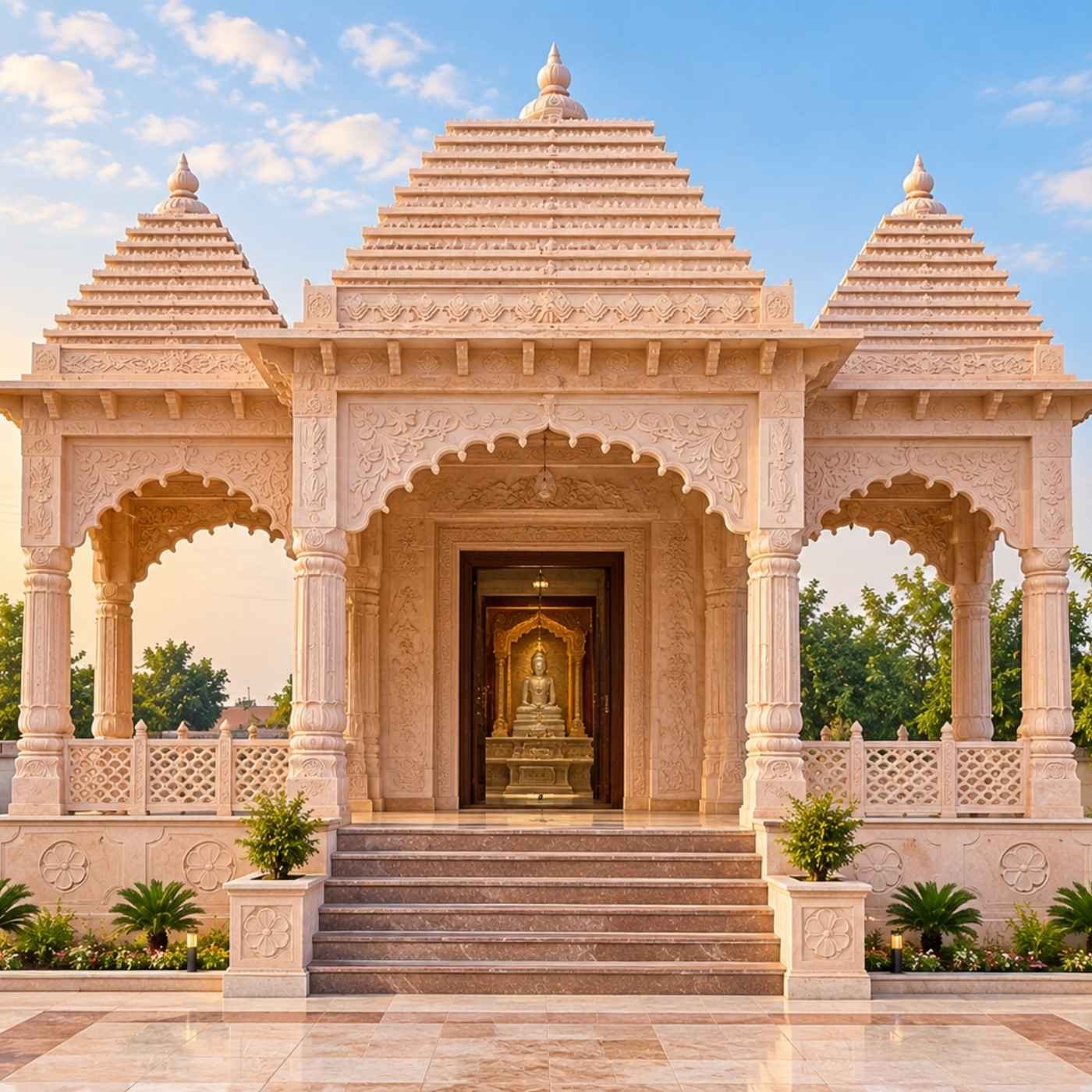
Versatile and classic in scale, this standard Sandstone & Stone temple is designed to suit a wide range of residential landscapes, courtyards, and community spaces. Hand-carved from high-grade Sandstone & Stone material, it incorporates timeless architectural elements including scalloped entrance arches, delicate jali lattice patterns, and a majestic central spire. Combining structural durability with traditional Vastu-compliant aesthetics, this popular Sandstone & Stone design serves as an enduring center for daily prayer.


Standard Sandstone Temple Details
Traditional architectural specifications and dimensions for your project.
We can accommodate custom requirements, architectural drawings, and site-specific dimensions on request.
Standard Sandstone Temple Manufacturer in India – 12 × 26 × 21 Ft Traditional Design
At Natural Stone Industries, we work with natural sandstone to create traditional temple structures according to the space, design, and requirements of each project. This 12 × 26 × 21 Ft Standard Sandstone Temple is one such design, made using Bansi Paharpur Sandstone in a natural light pink to whitish-pink tone.
The purpose of this design is not simply to create a large stone structure. A temple has several individual elements that need to come together properly — the Garbhagriha, Mandap, carved pillars, Jali work, Mehrab, Toran, and Shikhara. Their proportions, stone selection, and carving details all have an effect on the final appearance of the temple.
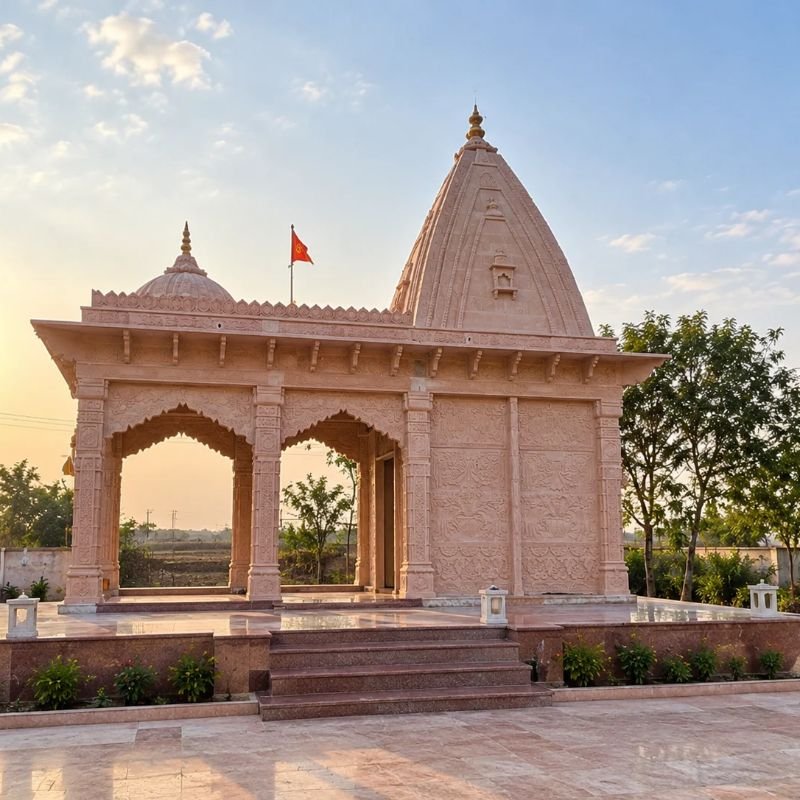
The temple shown on this page measures 12 Ft in width × 26 Ft in length × 21 Ft in overall height. The design includes 6 carved stone pillars, carved Jali work, 5 Mehrab panels, and 2 Shikharas. The same design can also be discussed in different dimensions when the available site space or architectural requirement is different.
If you are comparing different temple designs before starting your project, you can explore our main collection of sandstone and stone temples to see other styles and applications.
1. About This 12 × 26 × 21 Ft Sandstone Temple
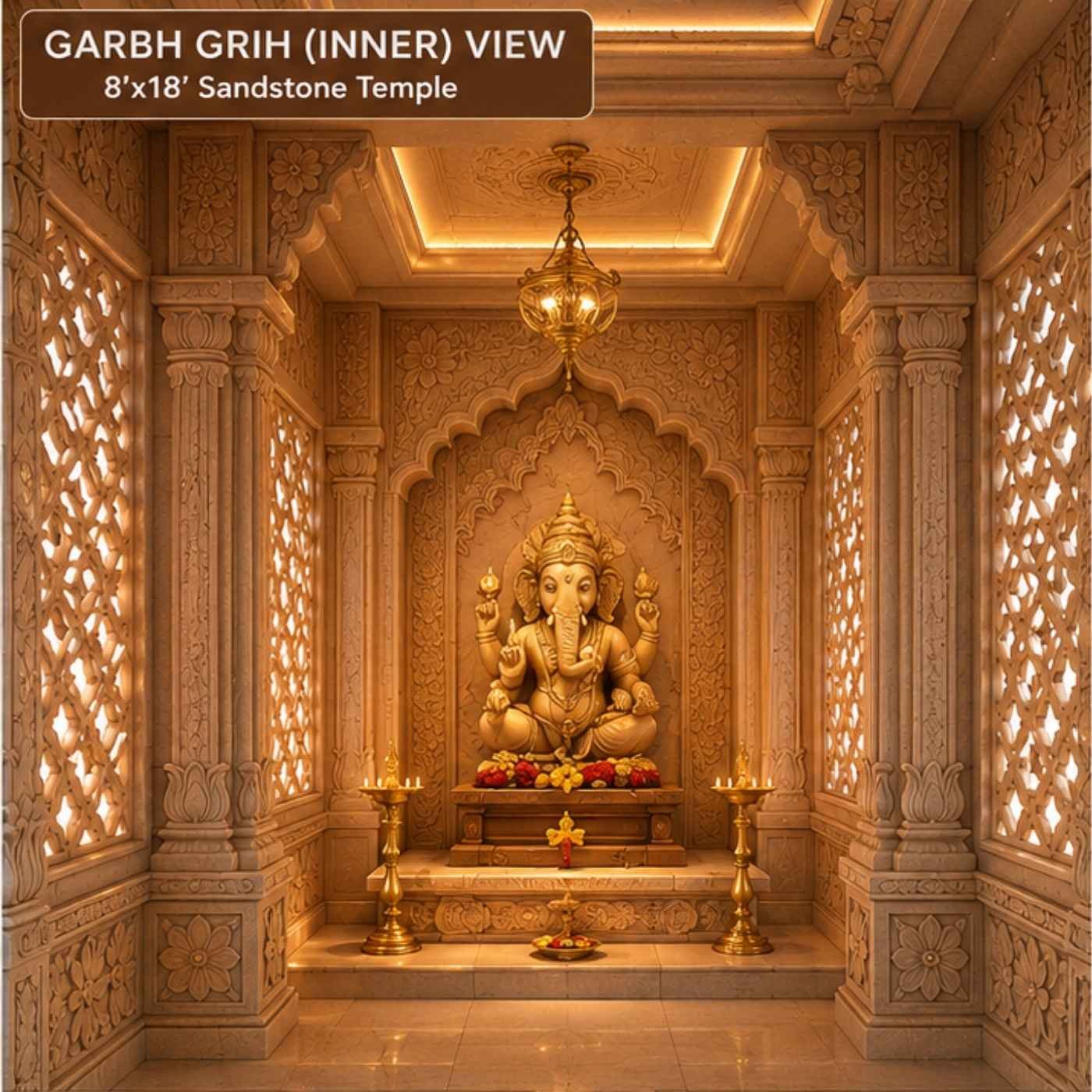
This temple has been planned as a traditional stone temple with a practical architectural layout. The Garbhagriha forms the main sacred area, while the Mandap provides the covered space in front of it. The carved pillars, Jali panels, Mehrabs, and Shikharas add the traditional architectural character of the structure.
A temple of this size is normally planned according to the site rather than treated as a simple ready-made product. The final design can depend on the available area, entrance direction, required dimensions, architectural details, and the type of stone selected.
For customers looking for similar decorative structural elements, our collection of architectural stonework includes other carved sandstone components used in traditional and modern projects.
2. Bansi Paharpur Sandstone – Natural Colour and Character
This temple is specified in Bansi Paharpur Sandstone, a natural sandstone known for its suitability for architectural and carved stonework. The selected appearance for this design is light pink to whitish-pink, giving the temple a soft and traditional stone finish.
One thing we always keep in mind with natural stone is that it does not look the same in every block. Small differences in colour, grain, texture and natural markings can occur from one piece to another. These variations are part of the natural character of sandstone rather than a printed or manufactured finish.
The final colour can also appear slightly different depending on daylight, surrounding surfaces, surface finish and the installation environment. This is why stone selection is an important part of planning a temple project.
You can also explore our sandstone art and craft collection for other products and architectural applications made from natural sandstone.
3. Traditional Temple Architecture and Main Components
The appearance of a stone temple comes from the relationship between its different architectural elements. In this design, the major components include the following:
- Garbhagriha: The main sanctum area of the temple, planned as the central sacred space.
- Mandap: The pillared area in front of the sanctum, providing space for worship and gathering.
- 6 Carved Stone Pillars: The design includes six carved pillars with traditional decorative detailing. For related pillar designs, you can view our Bansi Paharpur carved sandstone pillars.
- Carved Stone Jali: Jali panels are incorporated as decorative architectural elements and can also allow airflow through selected areas of the structure. See our handcrafted sandstone Jali panels for related designs.
- 5 Mehrab Panels: Traditional arched stone elements that add depth and detail to the temple architecture.
- 2 Shikharas: The two Shikharas give the structure its vertical temple character and form an important part of its overall appearance.
- Stone Toran: A decorative traditional entrance element that can be developed according to the selected temple design.
4. How a Sandstone Temple Is Made
Building a sandstone temple is a step-by-step process. Different components are first prepared separately and then brought together according to the final architectural design. The amount of cutting, carving, and finishing depends on the design of each individual stone component.
At Natural Stone Industries, the process generally moves through the following stages:
- Design and Requirement Discussion: We first understand the required temple size, available site space, architectural style, stone preference, and carving requirements. This stage is important because the dimensions of one temple may be completely different from another project.
- Stone Selection: Suitable Bansi Paharpur sandstone is selected according to the required colour, block size, and intended use. For carved components, the stone needs to be suitable for the required level of detailing.
- Initial Cutting: Larger stone blocks are cut into workable pieces according to the required dimensions. This is where the raw material starts taking the approximate form of individual temple components.
- Measurement and Marking: Required measurements and design references are marked before detailed work begins. This helps maintain the proportions of pillars, panels, and other architectural components.
- Rough Shaping: Excess stone is removed to bring each component closer to its final shape. The amount of material removed depends on the component and its design.
- Detailed Carving: Decorative work such as floral patterns, Jali designs, pillar details, Mehrabs, and other architectural elements is developed according to the approved design. This stage requires careful control of the carving depth and pattern.
- Finishing and Checking: After the main carving is completed, individual pieces are checked for dimensions, detailing, and overall finish. Any required finishing work is carried out before the components are prepared for the next stage.
- Preparation for Transportation: Stone components are handled and packed according to their size and weight before transportation. Larger architectural pieces require careful handling because natural stone is heavy and can be damaged if handled improperly.
- Site Installation Planning: The prepared components can then be transported to the project location. Installation requirements depend on the temple design, site conditions, and the scope agreed for the project.
The important part of this process is that every stone component is not treated exactly the same way. A pillar, Jali panel, Mehrab, and Shikhara component each has its own dimensions, carving details, and finishing requirements. This is where practical stoneworking experience becomes important.
5. Carving and Finishing – The Human Side of Stonework
The character of a traditional sandstone temple comes from the details that are visible after the rough stone has been shaped. Floral patterns, borders, Jali openings, and pillar details need to follow the design while still working naturally with the stone.
This is also where the difference between a basic stone component and a carefully finished architectural piece becomes noticeable. The final appearance depends on the proportions, carving depth, edges, surface finish, and how the individual components come together.
Where detailed hand carving is required, artisans work on the decorative portions after the stone has been prepared. Precision cutting can help achieve the required basic dimensions, while detailed finishing and carving help develop the traditional appearance of the final component.
For this reason, we prefer to look at a temple as a collection of individual stone components rather than simply one large product. Each part has to fit the overall design.
6. Customization According to Your Space
The 12 × 26 × 21 Ft dimensions shown on this page describe this particular temple design. They should not be considered a fixed size for every sandstone temple.
If your available space is smaller or larger, the temple layout can be discussed according to the site. Depending on the project, customization may include the overall width and length, height, pillar dimensions, Jali pattern, Mehrab design, Toran details, Shikhara profile, and the level of decorative carving.
For a custom requirement, it is useful to share the available space, approximate dimensions, photographs or drawings of the site, and the type of temple you have in mind. This gives us a better understanding of what needs to be planned before the stonework begins.
7. Where Can This Sandstone Temple Be Used?
A temple of this scale can be considered for different types of private and institutional spaces, depending on the available land and project requirements.
- Private homes and large residential properties
- Farmhouses and private estates
- Gardens, lawns and open courtyards
- Temple trusts and religious campuses
- Institutional and cultural projects
- Other suitable architectural and spiritual spaces
8. Why Choose Natural Sandstone for a Temple?
Natural sandstone has been used in Indian architecture for generations. It offers a combination of natural colour, stone texture, and carving possibilities that works particularly well with traditional architectural forms.
For a temple project, the choice of stone should be based on more than colour alone. The required carving, component size, intended location, surface finish, and overall architectural design should also be considered before finalizing the material.
Bansi Paharpur sandstone is one of the natural stone options we work with for carved architectural projects. The final selection can be discussed according to the design and requirements of the project.
Frequently Asked Questions About This Sandstone Temple
Q1: What are the dimensions of this standard sandstone temple?
This particular temple design measures 12 Ft in width × 26 Ft in length × 21 Ft in overall height. The dimensions can be discussed and modified according to the available site space and project requirements.
Q2: Which stone is used for this temple?
The design is specified in Bansi Paharpur Sandstone, with a natural light-pink to whitish-pink appearance. As it is natural stone, minor variations in colour and texture can occur.
Q3: How many pillars are included in this temple design?
This design includes 6 carved stone pillars. The pillar size and carving pattern can be discussed if the temple is being customized for a different layout.
Q4: Is stone Jali work included?
Yes. The design includes carved stone Jali work as an architectural and decorative element. The Jali pattern and dimensions can be customized according to the temple design.
Q5: Can this temple be made in a different size?
Yes. The 12 × 26 × 21 Ft dimensions represent this particular design. Custom dimensions can be planned according to the available space and architectural requirements.
Q6: Is the stone carving done by hand?
The manufacturing process can combine precision stone cutting with traditional hand carving and finishing, depending on the individual component and design requirement. Detailed decorative work can require careful hand finishing by skilled artisans.
Q7: Can the pillars, Jali, and Shikhara design be customized?
Yes. Depending on the project, the pillar dimensions, Jali patterns, Mehrab details, Toran, and Shikhara profiles can be discussed and customized.
Q8: Where are these sandstone temples manufactured?
Natural Stone Industries manufactures sandstone products in Rajasthan, India. Project-specific manufacturing, transportation, and installation requirements can be discussed before the order is finalized.
Q9: Do you provide delivery across India?
Pan-India transportation can be arranged for suitable projects. The transportation method and installation requirements depend on the size, weight, and number of stone components involved.
Q10: How can I get a quotation for a custom sandstone temple?
You can contact Natural Stone Industries with your required dimensions, available site space, preferred stone, and design requirements. Photographs, drawings, or reference images can also help us understand the project before discussing a quotation.
A Note From the Manufacturer
Every temple project is slightly different. The dimensions that work for one site may not be suitable for another, and the amount of carving can also vary with the design. Our approach is to first understand the requirements and available space, then work out the stone components, dimensions, and carving details accordingly. Natural stone has its own colour and texture, and we believe these natural characteristics should remain part of the finished temple.
Request a Custom Quotation
To discuss your custom temple requirements, dimensions, stone selection, or design modifications, call or WhatsApp us at +91 9887422452 or email sunilkumarsaini9887@gmail.com.
Explore More Stone & Temple Products
Explore our collection of stone temples, carved pillars, Jali panels, and architectural stonework.